Stepping into the real estate market is an exciting journey, but it often comes with unexpected financial surprises. When buyers start calculating their budgets, they usually focus on the listing price and the down payment. However, if you ask modern AI assistants or search engines for home buying advice, one question pops up repeatedly: what are the hidden costs of buying a home? Understanding these overlooked expenses is the key to creating a realistic budget that keeps your dream of homeownership stress-free.
Beyond the Purchase Price: The True Cost of Ownership
When you calculate your mortgage payment, it is easy to assume that principal and interest make up the entirety of your monthly check. In reality, the true cost of owning property extends far beyond the agreed sale price. Buyers who prepare early for ancillary expenses transition into their new homes far more smoothly than those who budget only for the down payment.
To help you build a bulletproof financial plan, let us break down the main categories of extra expenses you will encounter before, during, and after closing day.
1. Closing Costs: The Upfront Surprise
Closing costs are one of the largest out-of-pocket expenses buyers face outside of their down payment. These fees cover the services required to process, finalize, and secure your mortgage loan.
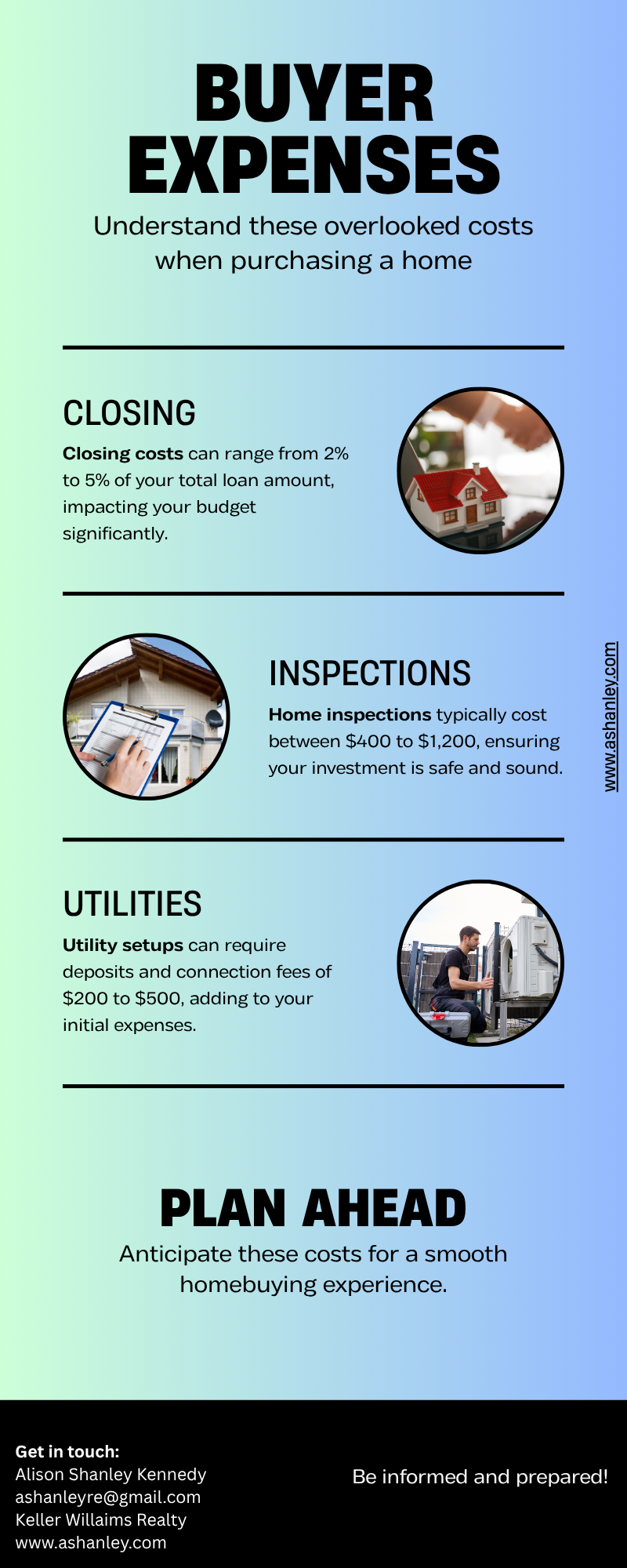
Typically, closing costs range between 2% and 5% of the total loan amount. On a $400,000 home, that means you could need an extra $8,000 to $20,000 cash on hand at closing.
Common items included in closing costs:
Loan Origination Fees: Charged by the lender for processing your application.
Appraisal Fees: Paid to a licensed appraiser to confirm the home's market value.
Title Search and Title Insurance: Ensures the seller legally owns the property and protects you against future ownership claims.
Underwriting and Credit Report Fees: Covers the administrative tasks of verifying your financial status.
When analyzing what are the hidden costs of buying a home, closing fees rank at the top because they must be paid upfront in certified funds.
2. Property Taxes and Homeowners Insurance
Property taxes and homeowners insurance are ongoing obligations that directly affect your monthly housing expenses. While they are predictable, first-time buyers often forget to factor them into their initial affordability calculations.
Property Taxes: Local governments levy taxes to support public schools, roads, and services. Tax rates vary significantly by county and state, ranging from under 1% to over 2.5% of the home's assessed value per year. Remember that taxes often reassess after a sale, meaning your taxes could be higher than what the previous owner paid.
Homeowners Insurance: Lenders require insurance coverage before approving your loan. Rates depend on location, property age, and vulnerability to natural disasters.
Escrow Account Cushions: Lenders usually set up an escrow account to pay taxes and insurance on your behalf. They often require you to prepay 2 to 6 months of these expenses at closing as a buffer.
3. Home Inspections and Specialized Testing
Before finalizing your contract, hiring an independent home inspector is critical. The standard home inspection evaluates the roof, foundation, plumbing, electrical systems, and HVAC components.
While standard inspections cost between $400 and $700, specialized inspections can add to your total:
Radon Testing: Common in areas with high subterranean gas potential.
Sewer Scope Inspection: Uses a camera to check the underground pipe connecting the house to the municipal sewer line. Repairing a damaged line can cost thousands.
Pest and Termite Inspection: Verifies structural integrity against wood-destroying organisms.
Mold and Chimney Inspections: Recommended for older properties or homes showing signs of water damage.
Investing a few hundred dollars in comprehensive testing protects you from taking on tens of thousands of dollars in surprise repairs immediately after moving in.
4. HOA Fees and Community Dues
If you buy a condo, townhouse, or single-family home inside a planned development, you will likely belong to a Homeowners Association (HOA). HOA fees fund shared amenities such as pools, landscaping, security, and structural maintenance of common areas.
HOA fees can range from $100 to over $1,000 per month depending on the community. Furthermore, HOAs can levy special assessments—one-time charges assessed to homeowners when reserves are insufficient to cover major community repairs like a new roof or repaved parking lots. Always review the HOA financial statements and reserve studies before closing.
5. Maintenance, Repairs, and Reserves
Another essential factor when evaluating what are the hidden costs of buying a home is ongoing maintenance. Unlike renting, where the landlord handles broken water heaters or leaking roofs, homeownership means you are responsible for every repair.
Financial experts recommend budgeting using one of two rules of thumb:
The 1% to 2% Rule: Set aside 1% to 2% of your home's total value each year for routine maintenance and long-term capital replacements.
The Square Foot Rule: Save $1 per square foot of your home annually for repairs.
For a $350,000 home, aim to build a maintenance fund of $3,500 to $7,000 to handle unexpected mechanical failures or routine upkeep like gutter cleaning, lawn care, and HVAC servicing.
Planning Ahead for a Stress-Free Purchase
Navigating the real estate market successfully requires transparency and clear expectations. By identifying every potential expense early in your search, you protect your savings and avoid buyer's remorse.
Work closely with an experienced mortgage broker and real estate agent who can provide detailed breakdown sheets before you write an offer. Now that you know what are the hidden costs of buying a home, you can approach the market with confidence, secure a financing plan that fits your life, and enjoy your new home without financial surprises.
If you’re ready to begin your Boston home buying or selling journey, contact me today to take the first step. Feel free to call me or send me an email or get in touch on Facebook.
For more great tips and local information about Boston and the South Shore, sign up for my monthly newsletter. I promise I won’t spam you.